Skip to product information
1 of 7
Low Stock
Shipping now

Granny Smith Apple Tree

Unmistakably crisp, classic tart flavor

Height
Trusted by 4M+ Gardeners
Grow Guarantee
Fast Shipping
Secure
Shipped from Asheville, NC

About the Variety

New

Key Features

Frost Tolerant
Heat Tolerant
Attracts Bees
Fragrant
Easy to Grow
Edible

Plant Details

LIFE CYCLE

  • Perennial

SEED TYPE

  • Live Plant

LIGHT REQUIREMENT

  • Full Sun

BLOOM SEASON

  • Spring

GROWTH HABIT

  • Upright

COLOR

  • Green

MATURE SIZE

  • 12-15 ft. x 8-10 ft.

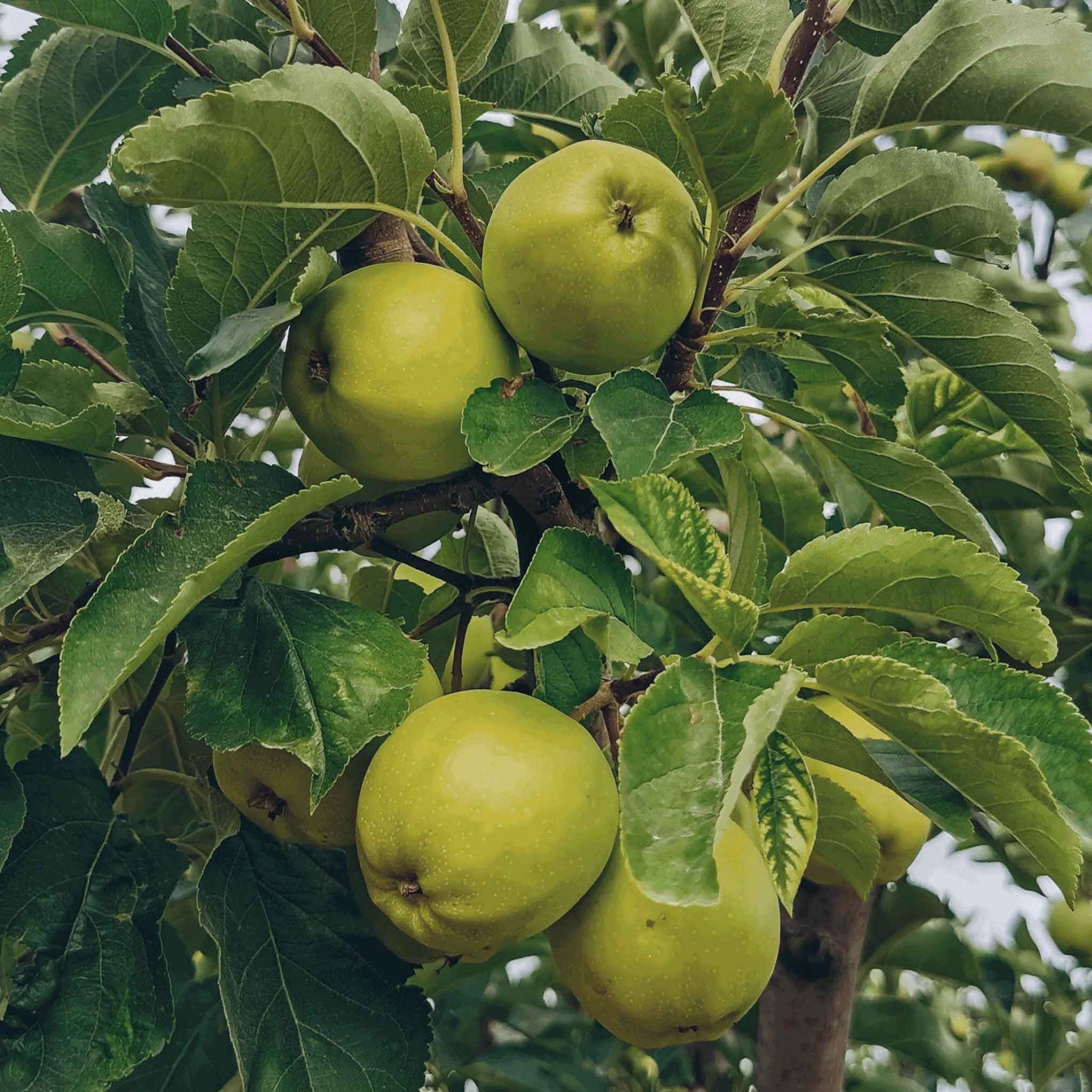
The original tart-and-crisp green apple, Granny Smith is famous for its firm, juicy bite and unmistakably bright, tangy flavor. Discovered in Australia in the 1860s, Granny Smith Apple Trees produce versatile fruit that holds its shape beautifully when baked, resists browning when sliced, and stores exceptionally well. Repening in October into November, these classic green apples are outstanding for pies, baking, salads, cheese boards, and fresh snacking.

This item is excluded from coupon codes and site-wide promotions.

Available across most of the U.S. — except AK, AZ, CA, HI, ID, OR, WA.

  • • One of the best apples for baking
  • • Late-season harvest, extending your apple season well past the early varieties
  • Needs a pollinating partner; plant a different but compatible apple variety nearby to set fruit

Planting Information

PLANTING SEASON

  • Spring
  • Fall

PLANTING DEPTH

  • Plant no deeper than the root ball

WATER NEEDS

  • Average

PLANT SPACING

  • 8 to 10 feet

HARDINESS ZONES

  • 5
  • 6
  • 7
  • 8

Planting Guide

recommended growing zone View our Apple Tree Planting Guide to learn more.

Companion Plants

1 of 3

Granny Smith Apple Tree FAQs

How does a Granny Smith taste compared to other apples?

It is the classic tart apple! Granny Smith is high in acid, low in sugar, with a bright, almost lemony bite and dense, very crisp flesh. That sharpness is exactly why bakers reach for it: it holds its shape and balances the sweetness in pies and tarts rather than turning to mush.

Do I need a second tree to get fruit?

Yes, for dependable crops. Granny Smith is not reliably self-fertile, so plant a compatible apple variety (or a flowering crabapple) that blooms at the same time within roughly 50 feet. The two trees cross-pollinate and you'll get far heavier, more consistent harvests.

How soon will it bear fruit?

Most apple trees begin bearing a few years after planting once they establish a strong root system and fruiting wood. Full sun, steady care, and a nearby pollinator all help the tree reach productive cropping sooner.

Can I grow it in a cold climate?

Yes. Granny Smith is hardy in USDA zones 5 through 8 and actually needs a substantial cold winter to set fruit well. It is well suited to regions with real winters and less suited to areas with very mild, warm winters.

Why is my tree dropping fruit or leaves?

A natural early-summer "June drop" of small fruit is normal as the tree sheds what it can't support. Excessive drop usually points to drought stress, poor pollination, or insect pressure like codling moth. Keep watering even, confirm a pollinator is nearby, and watch for pests. Sudden leaf loss can signal fungal disease such as apple scab — improve airflow with pruning and remove fallen debris.

When and how do I harvest and store them?

Harvest in October into November when the apples are full-sized and the skin firms up and brightens. Cup each apple and twist upward so it snaps off at the stem. Granny Smith is one of the best-keeping apples. Stored cool, it stays crisp for months, making it ideal for fresh eating, pies, sauces, and salads well into winter.

Grown by Our Community • All apple trees

    1 of 0